January 28, 2013

My first quilt block ever (made modern of course!)

I've done pieced-together quilting and bunting and even a couple mug rugs, but it wasn't until today that I completed my very first quilt block. This block is going to be part of a larger project, (gosh it would look so great as a pillow on our sofa as well), but anyway, I couldn't wait to share it. I am so proud of the way it turned out, and it wasn't easy!


After much deliberation, I decided to start with the traditional log cabin style block. I wanted a block style where you could clearly show off a fantastic print, such as Victorian Dream by Quilting Treasures, as shown. I also considered card trick and wonky log cabin but leaned towards clean lines since the print was not straight.
 
I made it modern by fussy cutting a large center piece, off-centering it, and using some kick-ass modern day prints - some of which came out of my scrap stash and others are new from my favorite fabric store ever, Fancy Tiger.
 
The greatest challenge for me (besides deciding on the style) were the colors. The first time I laid this block out, I used prints that were all shades of brown. They were nice patterns, but honestly, it was boring, and I knew that. I needed to be a little more risky. I needed to know when someone looked at the block, that their eyes would be taken on a little journey of discovery.
 
After a couple trips to the fabric store for inspiration, where I did pick up the awesome black and gray fabric used in the block, which incidentally was a remaining bolt from a Gothic, Halloweeny line of prints (very fitting for a Victorian block) -- the colored fabric I ended up using came from my existing stash. 
 
That's one of the reasons I'm so excited about this block. I didn't rely on a pre-selected bundle chosen by someone else to come up with the contrasting colors and patterns. Nope, this is all my creation, (except for the actual prints, of course).
 
PS, I love getting a great bundle of prints - but I also love successfully choosing the fabrics myself and knowing no one else in the world is making something with the same print combination. I was reminded of all of the oil paintings I did when I was younger. Colors were so challenging for me, but it was when I got the colors right that I really felt like an artist, like I created something great and unique in the world.
 
Anyway, thanks for sharing in the fun. This block will have a sister, which I've got all planned out and am so excited to start and will share soon!

Sincerely, Stacy

January 12, 2013

Bugs, bikes, keys...and doilies, say what?

I started a new project this week that I'm very excited about. It includes bugs, bikes, keys, polka dots, and more. Without pictures, it might sound like a kids project, but it's an adult mini-quilt wall hanging with Victorian and steam punk flair! Check out the beginnings. So excited. More to come!


January 4, 2013

Feeling loopy?

I recently saw this at my mom's house. She still uses it. I made it when I was 12. Are these still around?


January 3, 2013

Top 5 reference books for newborns

These are the books we referenced over and over during the first few months with our new baby, and I share them here to help others sift through the overwhelming amount of information out there. Read them all you want prior to having the baby, but trust me, you won’t remember much, lol. They are best to just have on hand for after the baby arrives. That’s why I call these the top 5 “reference” books and not “study” books.

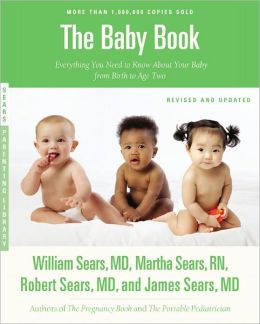
The Baby Book by Dr. Sears – Our favorite book with philosophies that felt right to us regarding skin-to-skin contact, baby wearing, night-time parenting, and more covered in a very loving and informative way. But note, take what works for you and the baby -- for example, our baby didn't take to baby wearing much the first year of his life. Note: There's a new addition as of 2013.

The Baby Book, Revised Edition: Everything You Need to Know About Your Baby from Birth to Age Two

The Baby Book 2013 Edition

What to Expect the First Year by Heidi Murkoff – This book was given to us, and we thought it might be too mainstream to be useful, however, when you need simple information fast (even just a sentence to validate you didn’t do something wrong), this book delivers. For example, we needed to know if a baby would blow up if breast milk and formula were mixed, and nope, they won’t. In the moment, that was very important information for us to have, and so we recommend this book for quick answers needed in desperate moments.

Caring for Your Baby and Young Child, 5th Edition: Birth to Age 5 by Steven Shelov / American Academy of Pediatrics – It's a good idea to have a medical book on hand. A friend gave us an older version of this book, and it saved us with some direct medical questions that came up in the middle of the night regarding temperatures, constipation, etc. It’s also a great book for cross-referencing medical info from other sources, like the Internet, healthcare providers, etc.

Healthy Sleep Habits, Happy Child by Marc Weissbluth – This was our bible while trying to figure out the sleep thing. The best part about it is that it covers the science of sleep and offers different options in addition to and including the cry-it-out method. Have it on hand FOR SURE!

(Side note about a sleep book we don’t recommend: Babywise--we don’t recommend this book, because the way the "cry-it-out" method is covered is too simplistic and narrow and does not work (and/or isn't right) for all baby types and parents. The way the method was covered in this book didn't work for our baby. An optional similar method is covered in the above book Healthy Sleep Habits, which provides much more comprehensive, research-based information.)

The Happiest Baby on the Block by Harvey Karp – Watch this in DVD format before and after your baby is born to get great tips regarding incessant newborn crying.

Bonus recommendations:

Secrets of the Baby Whisperer by Tracy Hogg – This is the one book that wasn’t really a reference book. We read it once (actually I downloaded it for free as an ebook from the library and listened to it quickly). It has some great, practical ideas that have stuck with me throughout our baby sleep experience. For example, it presents the E.A.S.Y. method sleep routine, which we applied to create our own routine. And also beneficial in this book is a great way to speak with your baby, constantly and lovingly and the benefits.

Baby-Led Weaning: The Essential Guide to Introducing Solid Foods by Tracey Murkett and Gill Rapley – A must read on introducing solids. (1), Don't introduce solids until 6 months (for so many reasons covered in this book), and (2), this book will give you confidence and know-how regarding those early months of feeding. And don’t forget to just apply whatever works for your family. Where this book focuses on never having to make purees, that was a little extreme for us, so we did both—purees and non-pureed-solids. Believe me, it takes some skill (and strength) to watch and support your baby learn about their swallow vs sucking instinct when starting solids; there will be gagging and parental fear, but this book will help.

IMPORTANT NOTE: The key to reading any book, working with any professional, or source of information is being able to synthesize what you learn and apply it to your situation and what works for your family. In most cases, there is never one answer, so seek information, listen to your heart, and do your best--that’s what matters the most. As a matter of fact, that's parenting.

November 11, 2012

Homemade baby corduroys 18-24 months old

I made these for the little man during a sewing class at Fancy Tiger, my favorite neighborhood craft shop.  Classes are usually 2-3 hours long and provide a set amount of time to focus and complete a project—not to mention gain new skills and access to a great crafting community.  


October 31, 2012

Great baby services and resources in Denver

Because we ended up working with Mountain Midwifery, Denver’s birth center, for prenatal care and birth services, we were exposed to an amazing community of service providers and local resources that most people probably aren’t even aware of, and we took full advantage. Even if you don’t live in Denver, that doesn’t mean these types of services aren’t available in your area too.

Dr. Michael Hall, OB/GYN – The best in the area if you are interested in minimal invasive birth. If you are in the Denver area and your insurance covers Dr. Hall, don’t think twice about your OB/GYN, contact Dr. Hall.

Heather Thompson is an amazing postpartum doula. We had no idea what a postpartum doula was until we needed one. (Postpartum doula’s are birth and newborn care experts who support parents right *after* birth). I highly recommend contacting her if you have any questions or personal needs after birth. You might ask why would you need someone after birth to support you, but if you can imagine coming home for the first time and trying to take care of a brand new baby who won’t eat and won’t sleep while recovering from a traumatic birth experience and not sleeping for 3 days, well, she was our savior. She came to our home twice for two hours and answered all of our questions from simple ones like is it okay if the baby sleeps in the swing if he won’t sleep anywhere else, how do we best bath a baby, why won’t he latch, why was birth so hard, how come we feel for miserable. She even wrote down a list of routines and resources to aid in immieidate needs and on-going newborn care. You can find her at Mountain Midwifery and learn more about her on their About Us page here.

Apothecary Tinctura – This is where you can get all of the natural herbs and remedies you may want or need after birth. If you don’t think you’re a touchy feely natural medicine person, still keep this place in mind. Birth is probably the most intensely natural experience you will ever have, and if you have any medical needs, you probably won’t feel comfortable seeking conventional medicines – this is where you’ll want to go. You can get herbs to aid mom’s physical recovery after birth, milk production and soreness, etc. Check it out. You’ll see what I mean. And don’t be afraid to send your husband here after birth with a list of issues you need to address regarding recovery and baby care after birth. They are incredibly helpful.

The Mother’Hood – A business in Denver that offers support services for new parents, people with babies and toddlers. Don’t try to figure everything out on your own – take advantage of these workshops and classes. They are very reasonably priced and give you access to the best baby experts in town, not to mention a great community of like-minded people and the best books and products available. The Mother’Hood offers so many great resources but here are few that were especially useful for us.

Breastfeeding support group at The Mother'Hood – If you have any issues at all with breastfeeding, get yourself to this support group ASAP. (Or contact Amanda Ogden directly for a home consultation.)

Sleep support group at The Mother'Hood – This support group saved as when our baby was about 1 years old and would no longer go to sleep on his own. Within a week after attending one class, our baby was sleeping through the night, without crying it out, which never felt right to us! You can attend when your baby is any age. (Or contact Patience Bleskan directly who teacher the class and who is a local baby and toddler expert in many areas.)

Developmental Playgroup at The Mother'Hood – Also taught by Patience Bleskan, you learn about baby and toddler play and development, can ask questions, all while your baby gets to play with other babies and creative activies.

Playgroup - the little ones eat everything,
so they can't play with stuff like sand and clay yet,
but oatmeal works for a sandbox!

Patience Bleskan We’ve also taken Potty Training and Discipline with Yes classes with Bleskan. She is awesome and thinks just like we do.

Mountain Midwifery – The only real birth center in Colorado filled with amazing midwives who take good care of expectant families. If you can’t work with Dr. Hall, go here. If you do, Dr. Hall in their backup doctor. Just make sure your insurance covers both.

Amanda Glen We met with this Doula the day before I went into labor and so wish we would have contracted with her. Whereas Heather Thompson doesn't normally provide pre or during birth Doula services (just postpartum), Amanda Glen does. Interview her if you looking for a Doula - I know we will if we ever do it again.

Top 20 baby buys for before baby arrives

Off the top of my head and in no particular order, these are the most important things to have on hand before your newborn arrives.  
  1. Co-sleeper or bassinet – to have your baby sleep next to you during the first important months - our baby grew out of the co-sleeper and moved into his crib at 5 months
  2. Wipes warmer - I'll never forget how much he appreciated warm wipes
  3. Lots of very soft newborn receiving blankets
  4. Nasal saline (the kind with a built-in sprayer worked best) and nasal aspirator (the kind with a tube and mouth piece for you to physically suck goo out in addition to having a few of the manual-squeezable kinds around). Don't forget, your baby has no way of blowing their nose for a while.
  5. Changing table & diaper genie - Someone told me these weren't needed, but we used ours for convenience and the genie really does help control smell. We only use the diaper genie for poopie diapers though, to save on $ spent on the expensive bags
  6. Sleep sacks wearable blankets Buy the smallest and next size up, then size up as baby grows. Our 18 month old is still wearing one during winter months for naps and night sleep and just upgraded to size large. Get just the simple, regular polar fleece ones, brand is Halo.
  7. One-piece zip-up jammies - Fleece for cold months and nice pure cotton for warmer months
  8. Baby wrap and/or carrier for keeping the newborn on you as much as possible the first year. We had a moby wrap and bjorn that was given to us and used both at different times.
  9. Breast pump - helps get milk flowing if there are any issues in the first few days and keeps it going when you have to go back to work or be gone for whatever reason (the Pump-in-Style highly recommended) and multiple breastfeeding pillows (boppies) - I'll never forget how sore my arms were those first few months due to holding the baby up to breastfeed without a boppie.
  10. Snuzzler provides extra padding in a car seat for a newborn. Our baby was swallowed by the carseat and his head wouldn't stay up without a snuzzler on the way back from the hospital. Get one of these for sure!
  11. A few simple board books to start reading young. Still one of our favorites is I like it When.
  12. Baby care books - The Baby Book, American Pediatrics, and What to Expect in the First Year to name a few we used religiously - you will know nothing when that baby arrives no matter how much you've read - this is on the job training to the max, have some good reference books on hand - the Internet will just drive you crazy with extreme opinions, stupid debates, or too much or too little or over-hyped information
  13. Burp rags (Gerber disposable diapers double great as burp rags)
  14. Diapers - goes without saying. Have newborn size, and a box each of size 1 and 2 on hand, because they grow fast during the first few months, and you don't want to get caught without diapers. Consider cloth diapers too, (which we didn't do, because breast feeding was so hard to get going that we skipped). 
  15. Carseat - again, goes without saying. Should be rear-facing as long as possible for safety. Ours was given to us and was a Graco.  
  16. A few bottles and formula in the kitchen just in case breastfeeding takes a while to get going - don't worry, babies cannot get nipple confusion during the first few months of life - Playtex® VentAire® Advanced Wide are THE BEST per our amazing lactation consultant
  17. Glider for rocking baby and exercise ball to bounce baby on when he won't sleep - worked wonders when baby won't stop crying during the first few months
  18. Swing - sometimes nothing would work but the swing during the first few months for sleeping or peace from crying - have one on hand - don't worry about using it too much during those first few months - they grow out of it and lose interest in it fast. We preferred a wall-plug-in over a battery powered.
  19. A trusted family member to help keep you taken care of and fed during the first few weeks, so that you and hubby can focus on taking care of the baby. And friends to help bring you meals during week 2-4 while you're still recovering. Thanks to all of our family and friends for their amazing support!
  20. A couple bright toys that lightly squeak and rattle - it's fun to slowly move them around above the baby on the changing table as you start to see them focus and reach and smile
You may be able to live without...
  • Never used a plastic bath tub. We got in the tub with our baby every 3-5 days until he was old enough to sit up, which was about 5 months. This was one of the most special things we would do together during those first few months.
  • Didn't own a crib until our baby was 5 months old. Just happened that way. Our neighbor said they'd give us theirs, and their 2+ year old was still using it until our baby was 5 months - right when he grew out of his co-sleeper. And we're so glad we didn't have a crib to tempt us from moving him into his room too early, because it was really special (and safe) to have him so close while he was so young)
Some useful things for the fast coming months...
  • Bouncer - especially useful for being able to set baby down
  • Bumbo seat - so baby can sit up before they know how, and another useful item for being able to set baby down
  • Highchair for eating - very handy to feed him in when you start to give him solids at 6 months
  • Baby spoons, bibs, baby washcloths for the dining area - he'll be eating before you know it! We have washcloths for baby only in the dinning area to ensure they were never mixed with other cleaning rags.


Baby in Bumbo seat during Christmas 2011 - 5 months old

Happy Halloween!

My husband is a major Halloweener. It's his crafty form of self-expression every year, and he does an amazing job at decorating the house for our annual Halloween party and putting together a schedule of fall fun...if you couldn't tell from these pics...Happy Halloween!!


October 28, 2012

Car Seats - Turn from rear- to front-facing way later than you think

A rear-facing car seat causes the passenger seat to have to be moved up really close to the windshield.  It's one of the main reasons we haven't gone on any major road trips with the baby yet. And ever since everyone we know got a front-facing carseat for their young baby, we have been researching getting a new one ourselves to reclaim that room.

But in talking to local experts, we learned that it is safest for babies to stay in a rear-facing infant carseat as long as possible, until they are 18-24 months old. So as nice as it would be to be able to have more room, our baby will stay in his rear-facing carseat until he grows out of it -- (And at 18 months, he is just starting to).